Exhibition
S S P
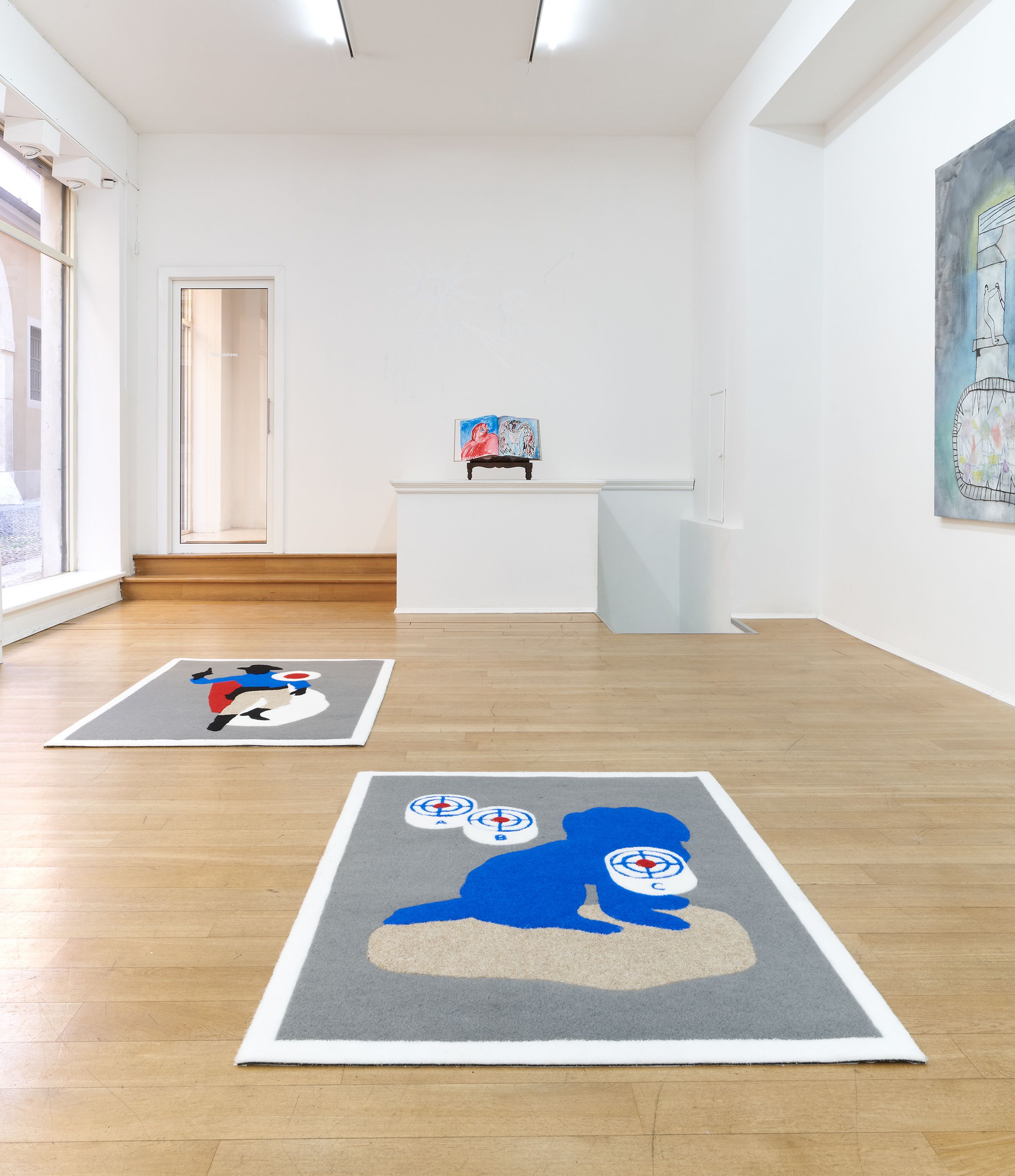
S/S/P is a two-person exhibition by Roberto Alfano and Oliviero Fiorenzi held at The Address gallery in Brescia. The exhibition explores the relationship between signs, landscape, and the imagery of the province through practices intertwining painting, memory, and visual language.
The province hides behind the betrayals of the beauty of things and the pleasures of the eyes. The green valleys, lake and river basins, plains and rolling hills with their customs, festivals, fairs, saints, and madonnas have given way to a mixture where signs and signals blend between peripheral and rural territories, vulgarizing — which, as history tells us, means translating into known languages — and mixing in the contradictory images that clothe the province. Because no matter how the silences and the cicadas’ chirping near landfills or logistics districts might evoke rough memories of peace and various comforts, the province has always lived its historic bovarism: staying where it is while dreaming of places beyond the territory, beyond natural and mental landscapes, reproducing in its spaces the dreams and nightmares that characterize the everlasting "isolation" of these places. Thus, the horizons of fields, hills, rivers, and shores become borders, along with doorsteps and the curling asphalt of highways that cut across the landscape. The real and mental territory folds in on itself, tightens, and reinvents itself, dreaming of itself. Where the gaze settles, you find the obsessions that inhabit the real province — the marginalized one, rewritten by the persistence of the bucolic narrative of rural life and tourism. These territories that fall under the definition of "province" are many things at once, oscillating between claustrophobia and claustrophilia; they are plural territories. Overloaded with signs and signals, the "provincial" imaginary is a melting pot bubbling with proto-Pascolian youths and Bianciardian workers, violence, and chronic gambling addictions. It is a kaleidoscopic vision that may recall the mirages of the heat on provincial roads, when the asphalt pitches like lakes at the passage of ferries; the stickers on the hulls of motorcycles; graffiti and the inflated writings of parties and local movements on the long derelict walls of logistics districts; the posterized, circus-like, and itinerant faces depicting rice weeders among exotic lions and Wild West gunmen; flags and banners waving on boats and tractors in processions in villages with vague agricultural memory; or the disordered rows of boats and buoys among lakes and rivers carrying old heavy effigies of saints with six fingers.
Roberto Alfano and Oliviero Fiorenzi have practices that intersect in these paths and areas. Graffiti, to begin with, was a common ground where the artists developed that relationship between painting and support — the much-praised display — where signs walked hand in hand with the landscape and were left to the passing of time on walls, glass, abandoned factories, and any surface able to create a recurrence with the landscape. It is from this common ground that the artists differentiated their practices.
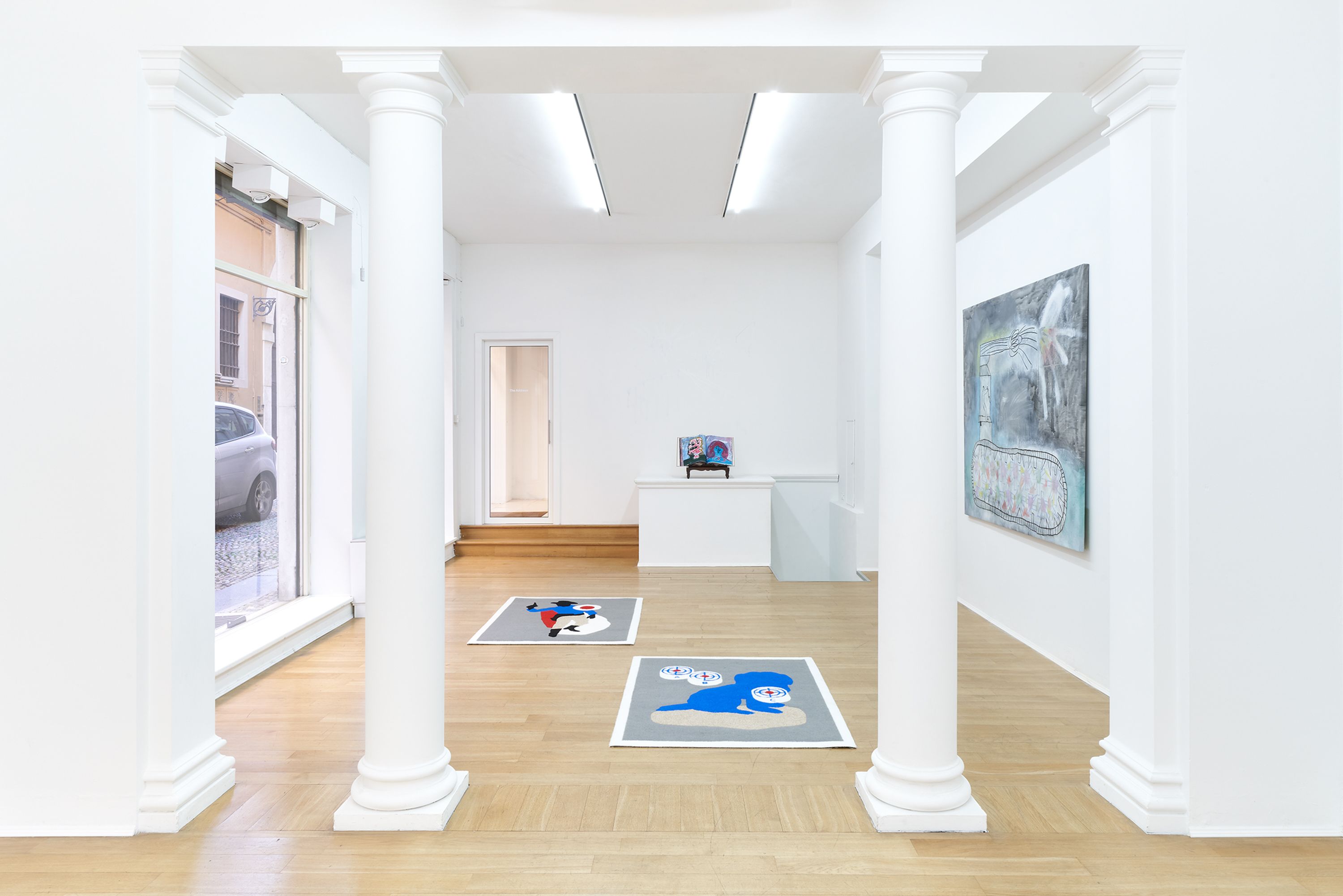
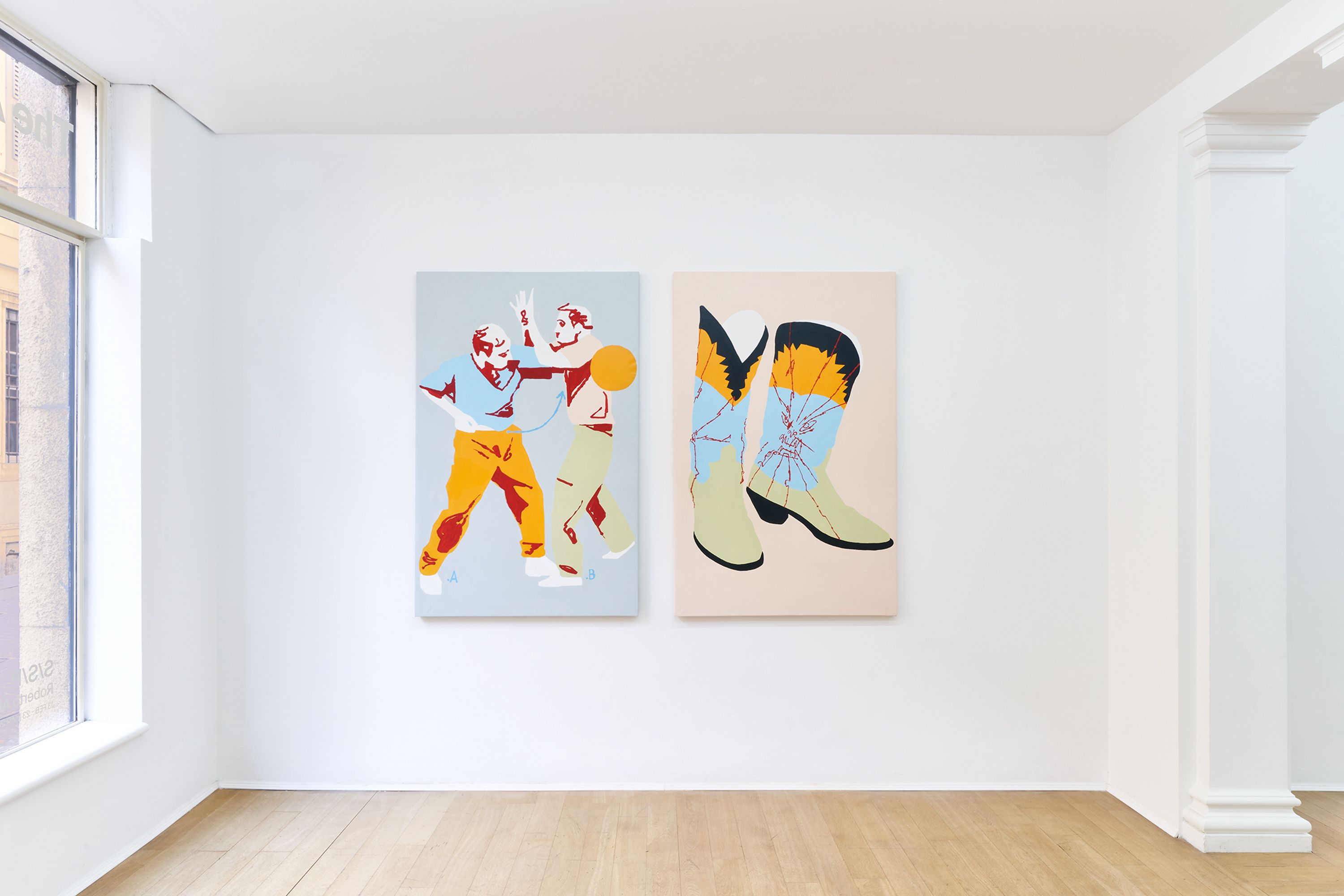
Roberto Alfano drew from the atmospheres of the plain’s imaginary, from the redundancies that tired and slowly took root in those who traveled them as children. We speak both of the initial popular imaginary the artist focused on for years and the redundancies that infused the province: from the Lega to nutria, to the "classicism" of bare warehouses, and so forth. Roberto’s work is that of obsessive sign, the recurrence of experience, and what the seemingly closed space of the province — narrow between fields and fog — leaves to the imagination. In the gaze that freezes a few meters ahead, it’s easy to lose rationality and be deceived, and Roberto’s practice refers to the inner space occupied by symbols, figures, and the characters of the imaginary. Memories that settle and fade, but also the mirages these spaces produce, where toys and childish behaviors, dreams and deliriums come to life — a mix of wars and classicisms, rainbows and tanks.
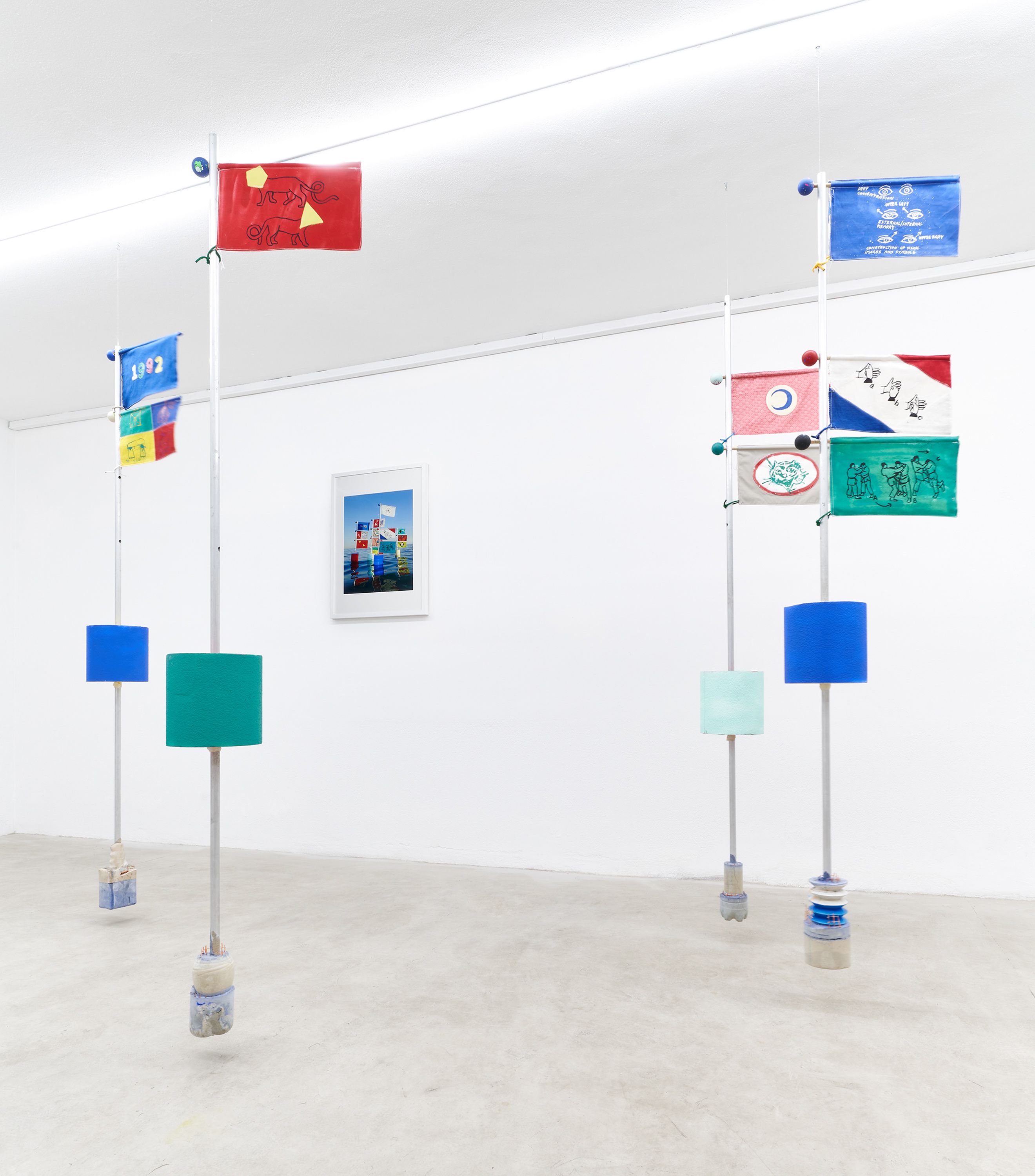
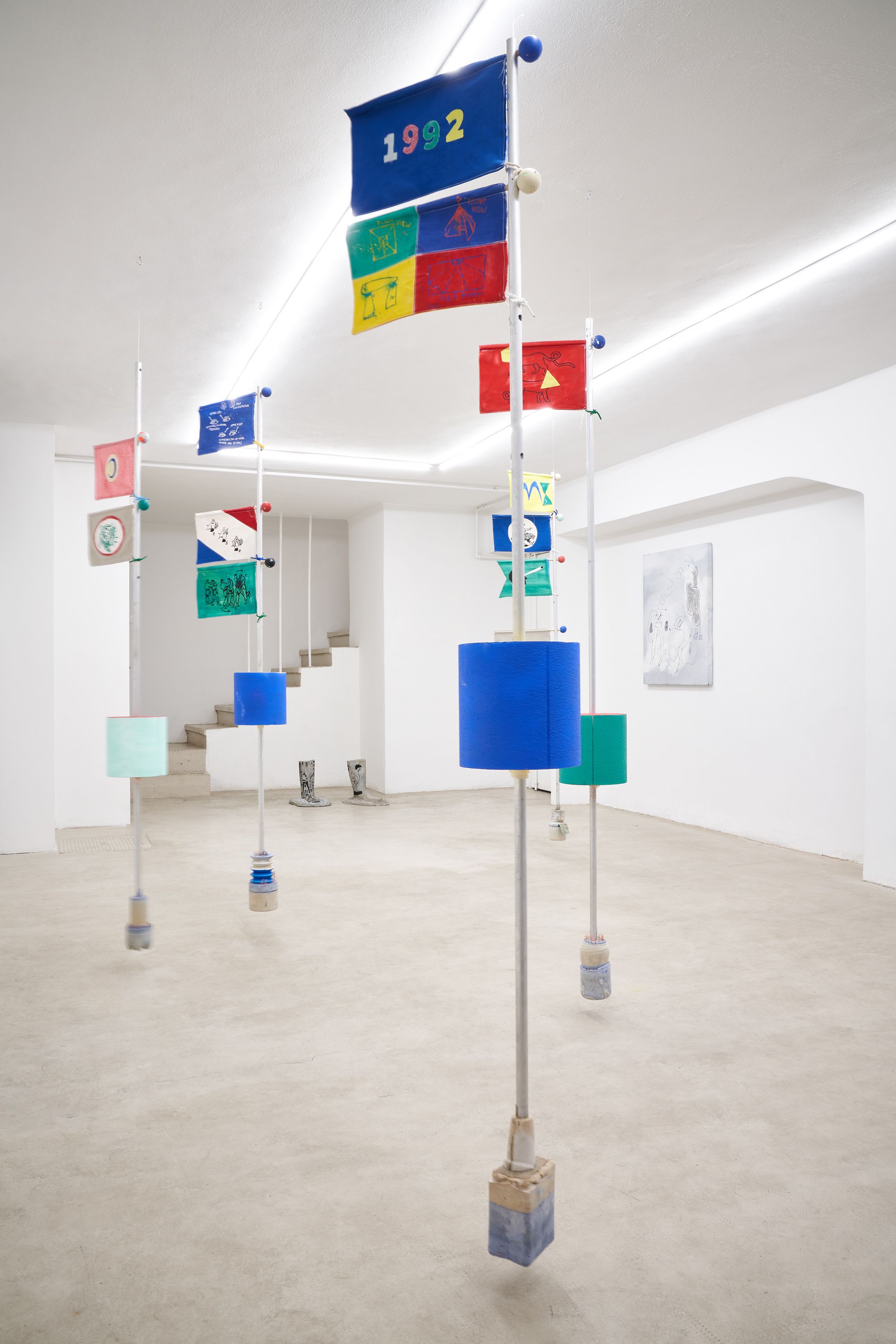
Oliviero Fiorenzi’s work, on the other hand, starts from the real territory, embracing the environmental, climatic, and temporal action that open space exerts on surfaces. The air slices, stirs, and makes noise, and in the haze at the edge of the horizon, what is needed are signals. His research focuses on the relationship between the painterly gesture and the signal, a practice that restitutes the landscape as a visual sign, like the chatter of a language that paints itself on all that the eye allows: buoys, towers, carpet, wind vanes; for Oliviero, territory is both support and structure of language. It is a legacy of orientation, walking, but also, more cynically, of ownership, flags, signs, and billboards. His work is about making landscape, providing the tools to read space through the recurrence of the painterly sign that the territory necessarily carries — signals that become autonomous alongside the noise of the wind and the turmoil made by the splash of waters and blades of grass.